 ← Index
“Every dollar spent in the cloud is an investment. And if it’s not delivering a return, it’s not viable.”
Rethinking Cloud Cost as ROI
Cloud cost used to be an expense. Something to minimize. Something to survive.
That mindset no longer works. Cloud is the assembly line now, and every dollar spent should create measurable value. Whether you’re building AI systems or deploying a new app experience, cloud spend is an investment. It has to return more than an invoice.
Yet many businesses don’t connect cloud spend to business outcomes. They see EC2 charges, not unit economics. They see budgets, not margins. That’s why companies run fast and still fail.
“You might be wildly successful and still fail—because the cost outweighs the return.”
Unit Economics: The Only Cloud Metric That Matters
To make cloud viable, you must first understand what your business actually does.
At CloudZero, we link cloud spend directly to business value—what it costs to deliver a meal at DoorDash, or stream a workout on Peloton. Anyone can show you infrastructure costs. We show the economics behind what you’re building, delivering, and monetizing.
Example:
You sell a digital widget for $1
Cloud delivery cost = $5
→ That’s not a viable business. And the sooner you know that, the faster you can adapt.
This visibility is what unlocks margin growth and innovation. Without it, you’re optimizing in the dark.
AI Adds Complexity. But the Principle Stays the Same.
AI has introduced a new layer of cloud chaos.
A chatbot or a prompt feels small. Behind it, you’re activating massive GPU compute, triggering managed services, and moving terabytes of data, all without fully realizing the cost implications.
You think you’re running an experiment, but behind the scenes you’re moving data, spinning up compute, and triggering services you didn’t even know were running.
That’s why we’re seeing success failures—AI systems that seem effective but operate at an unsustainable cost.
Foundational Models ≠ Foundational Understanding
The model landscape is shifting daily. Claude 3.5, Claude 3.7, DeepSeek. The ecosystem is noisy, fragmented, and fast-moving.
And because adoption is happening at all levels, from individual contributors to enterprise-wide experiments, cost control is slipping through the cracks.
You might have experiments happening all over your organization, and no way of knowing who’s doing what or whether it’s efficient.
Understand: Cost per prompt → Cost per inference → Cost per outcome
Agentic Workflows: Solving the Problem
Measuring costs is the easy part. At CloudZero, we’re using LLMs and agentic workflows to optimize them.
Ask → Trigger agents → Cross-validate → Actionable output
Here’s how it works:
-
A user asks: “What did I spend last week, and could I have spent it better?”
-
That triggers multiple agents:
One trained on AWS cost nuance
-
One focused on time-series usage
-
One for cross-cloud reconciliation
-
-
These agents talk to each other—LLMs validating LLMs
-
The output is accurate, auditable, and actionable
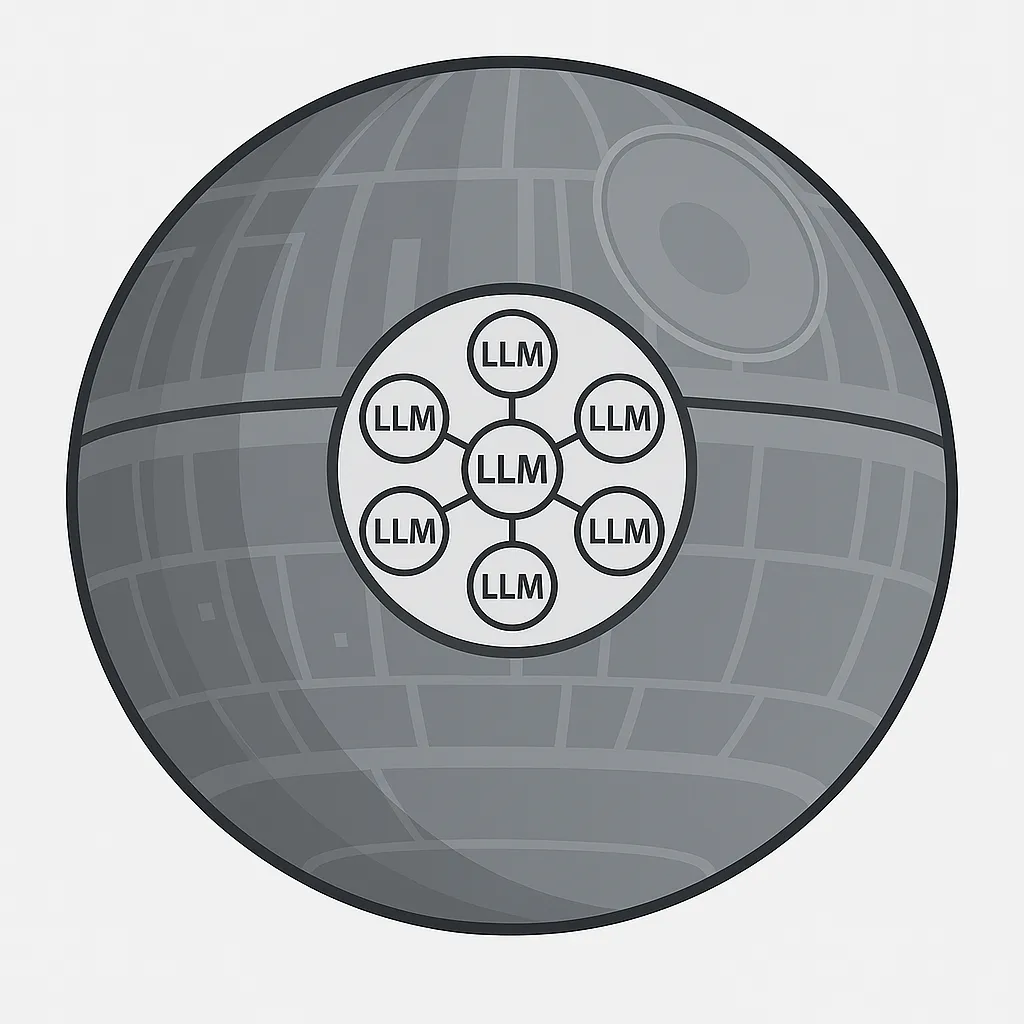
It reminds me of the early days of Kubernetes—now we’ve got a Death Star graph of LLMs talking, computing, and spending.
Hype vs. Reality: What’s Actually Working in 2025
While consumer AI tools still feel experimental, enterprise teams are succeeding by narrowing the problem set.
They’re applying GenAI to one tough question. They know how to verify the result. And they iterate until it’s right.
This is where agentic workflows shine:
-
They solve a small number of the right problems
-
→ Better and faster
-
→ With verifiable outcomes that finance and engineering teams can trust
Cost Powers Innovation
There’s a myth that focusing on cost stifles creativity. That’s just not true.
In reality, cost visibility fuels innovation. When teams know their economic constraints:
→ They design smarter
→ Move faster
→ Take bolder risks
Unlimited scale. But not unlimited wallet.
We saw this firsthand with DeepSeek, a team that reportedly trained its frontier model for $5–6 million by prioritizing efficiency from the start.
That innovation was driven by cost.
Don’t wait for a spending crisis to build discipline. Make cost part of your architecture from day one.
Final Thought
You don’t have to choose between cost control and innovation.
Connect cloud spend to business outcomes → Build systems that validate value → You unlock both.
Our customers aren’t just finding spare change in the couch anymore. They’re using cost as a lever to lead their markets.