

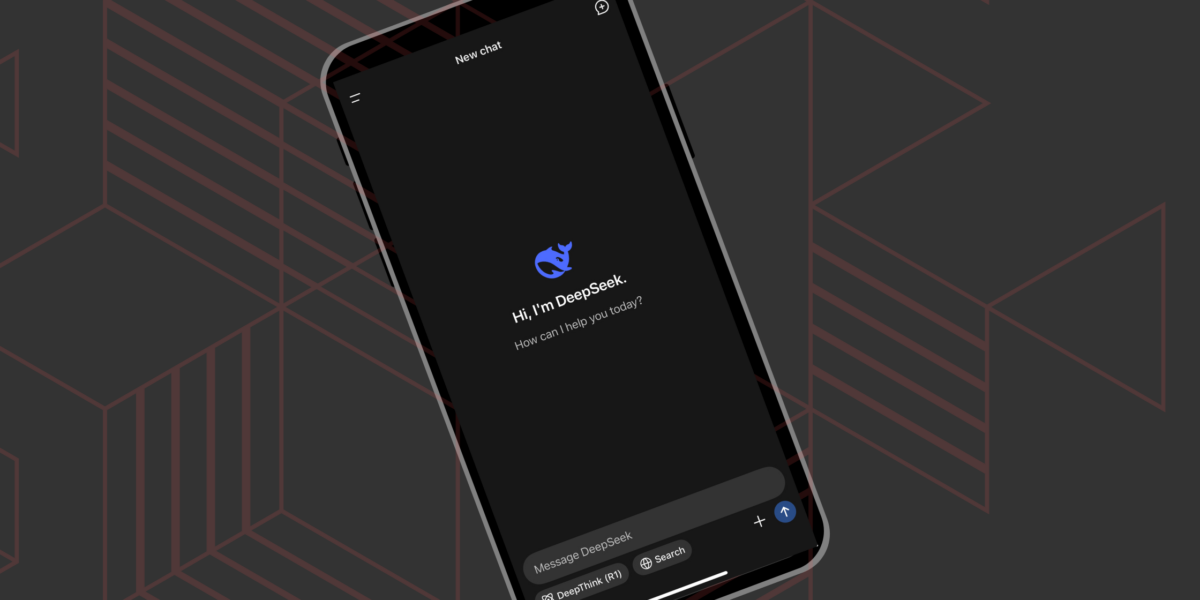
Every engineering decision is a buying decision. That realization hit harder than expected as I reflected on DeepSeek AI’s journey—a company that rewrote the rules for building AI systems by embracing a unique constraint: cost. It wasn’t a limitation. It was the catalyst that drove creativity and innovation.
Jevons paradox strikes again! As AI gets more efficient and accessible, we will see its use skyrocket, turning it into a commodity we just can’t get enough of. https://t.co/omEcOPhdIz
— Satya Nadella (@satyanadella) January 27, 2025
Jevon’s Paradox says when you make something more efficient, it increases consumption—and DeepSeek’s team reminds us that making AI production more efficient is going to drive consumption, not reduce it.
DeepSeek AI was working on a model that would compete in one of the fastest-moving spaces—language models. But there was a problem: the budget couldn’t stretch to meet the computational requirements. While other companies relied on massive GPU fleets, DeepSeek AI had to ask, “How can we achieve better results with less?”
The answer came through focus, simplicity, and a novel approach to efficiency. The result? A model that trained with 95% fewer GPUs than industry giants like Meta, without sacrificing performance. Their approach wasn’t just efficient; it was transformative.
Constraints as Catalysts
What made this solution so innovative was its mindset. Cost wasn’t a hindrance; it became the frame through which the entire engineering process was designed. They are pioneering a strategy called Auxiliary-Loss-Free Load Balancing for Mixture-of-Experts (MoE) models. Unlike conventional methods, which relied on auxiliary loss to manage expert load, this approach dynamically adjusted bias terms to ensure balance during training—all without impairing model performance.
Q: How did DeepSeek train so much more efficiently?
A: They used the formulas below to “predict” which tokens the model would activate. Then, they only trained these tokens. They need 95% fewer GPUs than Meta because for each token, they only trained 5% of their parameters. pic.twitter.com/Q0fYIT3gNK
— wordgrammer (@wordgrammer) January 27, 2025
Here’s how it worked: Each expert’s load was monitored, and bias terms were updated dynamically to prevent overloading or underloading. This strategy reduced wasted computation and maximized efficiency, proving that precision engineering can overcome even the tightest of constraints. By focusing on routing efficiency and computational balance, they unlocked new possibilities for scaling AI with fewer resources.
The formula for this success can be summarized in one phrase: simplicity drives scalability. Complex problems were broken into smaller, solvable components. For example, their token prediction strategy ensured only the most relevant parts of the model were trained. This precision reduced unnecessary computations and avoided redundant processes.
And so again…
“Every engineering decision is a buying decision.”
Building scalable AI systems wasn’t just about technological breakthroughs; it was about making intentional trade-offs that aligned with business goals. The lessons here transcend AI. Whether it’s managing cloud infrastructure or developing enterprise software, the principle is the same—intentionality in every decision unlocks value.
Over the years I’ve seen companies struggle to bridge the gap between engineering and finance. One department sees innovation; the other sees cost overruns. This proved it doesn’t have to be this way. By aligning their technical roadmap with customer needs, they made engineering decisions that were as much about delivering business outcomes as they were about building smarter AI.
When asked how they trained more efficiently, their team shared the technical nuances—but they also emphasized the philosophy behind it. It wasn’t just about saving money; it was about delivering more value with every dollar spent.
Lessons for Engineering-Driven Organizations
The broader takeaway here is simple but profound: Constraints drive innovation. When organizations embrace this mindset, they can:
- Prioritize impact: Focus on what matters most by aligning engineering goals with business outcomes.
- Simplify complexity: Break down large problems into manageable components and optimize each step.
- Build for efficiency: Treat resources as dynamic, not fixed, and constantly adjust strategies to maximize value.
This approach is an example of engineering ingenuity at its best. By refusing to accept the status quo, they didn’t just save money—they redefined what was possible.
Mission-Critical Decisions
Reflecting on this reminds me of an insight shared during a roundtable with leading AI companies. A CEO from Stability AI remarked, “Unit economics is critical to how we should think about building AI systems.” That conversation encapsulated a shared understanding among the executives present. In a fast-moving space like AI, efficiency isn’t a nice-to-have—it’s mission-critical.
Their journey offers a possible blueprint for others to follow. Their work proves that it’s not the size of the budget that matters, but how effectively it’s deployed. Every organization can benefit from asking the same questions that shaped this path:
- How can we achieve more with less?
- Are we making intentional decisions that align with our goals?
- What trade-offs can we embrace to drive better outcomes?
Innovation doesn’t thrive in comfort. It thrives in challenge. Constraints aren’t limitations; they’re opportunities. By focusing on efficiency and making engineering decisions that align with broader goals, companies can achieve transformational results.
Their success isn’t just their story. It’s a roadmap for any organization willing to embrace intentionality, prioritize simplicity, and focus on outcomes. In a world where every decision counts, there’s no better way to lead.